
Sustainable Retail Design Singapore: Eco-Friendly Store Solutions
Sustainable Retail Design Singapore: Eco-Friendly Store Solutions
Retail spaces in Singapore are evolving beyond aesthetics and customer flow.
Sustainability is increasingly influencing how retail spaces are designed, fitted out, and furnished. Environmental responsibility is no longer a niche consideration; it has become a core business expectation driven by corporate ESG commitments, consumer awareness, and regulatory direction.
For retailers planning a new store or retail renovation project in Singapore , sustainable design choices are becoming as important as layout efficiency and brand presentation.
This article explores practical eco-friendly solutions for retail environments, with a focus on sustainable furniture materials and how modern innovations are reshaping store fit-outs across Singapore.
Key Takeaways
- Sustainable retail design reduces environmental impact while maintaining brand quality
- Innovative engineered material solutions provide a responsible alternative to conventional furniture materials
- Furniture choices significantly influence a store's overall sustainability footprint
- Strategic material selection supports both ESG goals and long-term operational performance
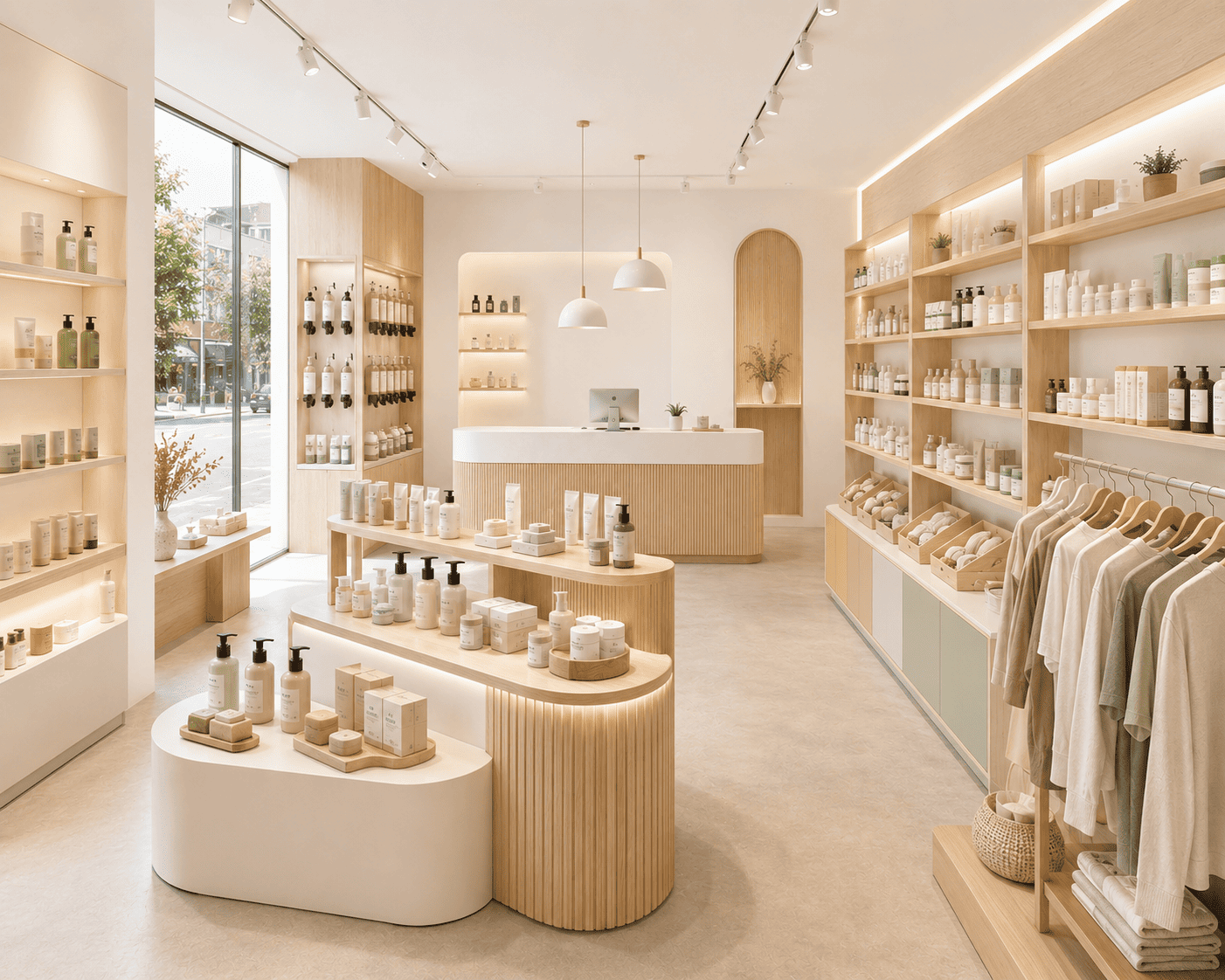
Why Sustainable Retail Design Matters in Singapore
Singapore's retail sector operates under increasing environmental scrutiny.
Brands are expected to demonstrate measurable sustainability efforts across their operations, and physical store environments play a significant role in that commitment.
Several factors are driving this shift:
- Corporate ESG reporting requirements
- Consumer preference for environmentally responsible brands
- Rising costs of waste disposal and energy consumption
- Regulatory frameworks encouraging sustainable building practices
- Long-term cost savings through durable, resource-efficient materials
Retailers are now evaluating every element of their store design through a sustainability lens, from lighting systems to furniture fabrication.
Sustainable Furniture Is the Foundation of Green Retail Spaces
Furniture is often one of the largest material investments in a retail fit-out and plays a significant role in determining the project's environmental footprint.
Display fixtures, shelving units, counters, seating and storage systems all contribute significantly to a store's overall environmental footprint through material sourcing, manufacturing processes and end-of-life disposal.
Traditional retail furniture often relies on:
- Hardwood timber sourced from vulnerable forests
- Petroleum-based foams and plastics
- Conventional composite materials with limited end-of-life options
- High-emission manufacturing processes
The environmental impact of these materials extends well beyond raw material extraction. Transportation, processing, installation and eventual disposal all add to the carbon footprint of a single store refurbishment.
This is why material innovation has become critical in sustainable retail design Singapore projects.
Designing Retail Fixtures for Long-Term Sustainability
Sustainable retail environments increasingly consider the entire lifecycle of fixtures, allowing displays to be repaired, relocated, refurbished, or reconfigured rather than discarded during future store refreshes.
At Lum Chang Brandsbridge, we recognise that sustainable retail design extends beyond material selection. Through thoughtful fixture design, precise fabrication, and future adaptability, we help create retail environments that deliver long-term value throughout their lifecycle.
Key considerations include:
Reuse
Existing fixtures can be reused or relocated to reduce material consumption and minimise unnecessary replacement.
Refurbishment
Furniture and fixtures can be refreshed or upgraded to extend their lifespan while maintaining design quality.
Repair
Repairable components allow damaged parts to be replaced or restored instead of replacing entire fixtures.
Modularity
Modular designs provide flexibility for future layout changes, seasonal campaigns, or store updates.
Disassembly
Fixtures designed for easier disassembly support more responsible removal, material separation, and end-of-life management.
Sustainable Engineered Materials: Alternatives to Conventional Timber
Engineered sustainable materials are becoming increasingly important in retail furniture fabrication as brands seek alternatives to conventional timber and synthetic materials such as Styrofoam.
At Lum Chang Brandsbridge, we support the adoption of innovative material solutions that promote more responsible resource use while maintaining the durability, flexibility and design quality required for modern retail environments.
Process: From Raw Materials to Finished Products
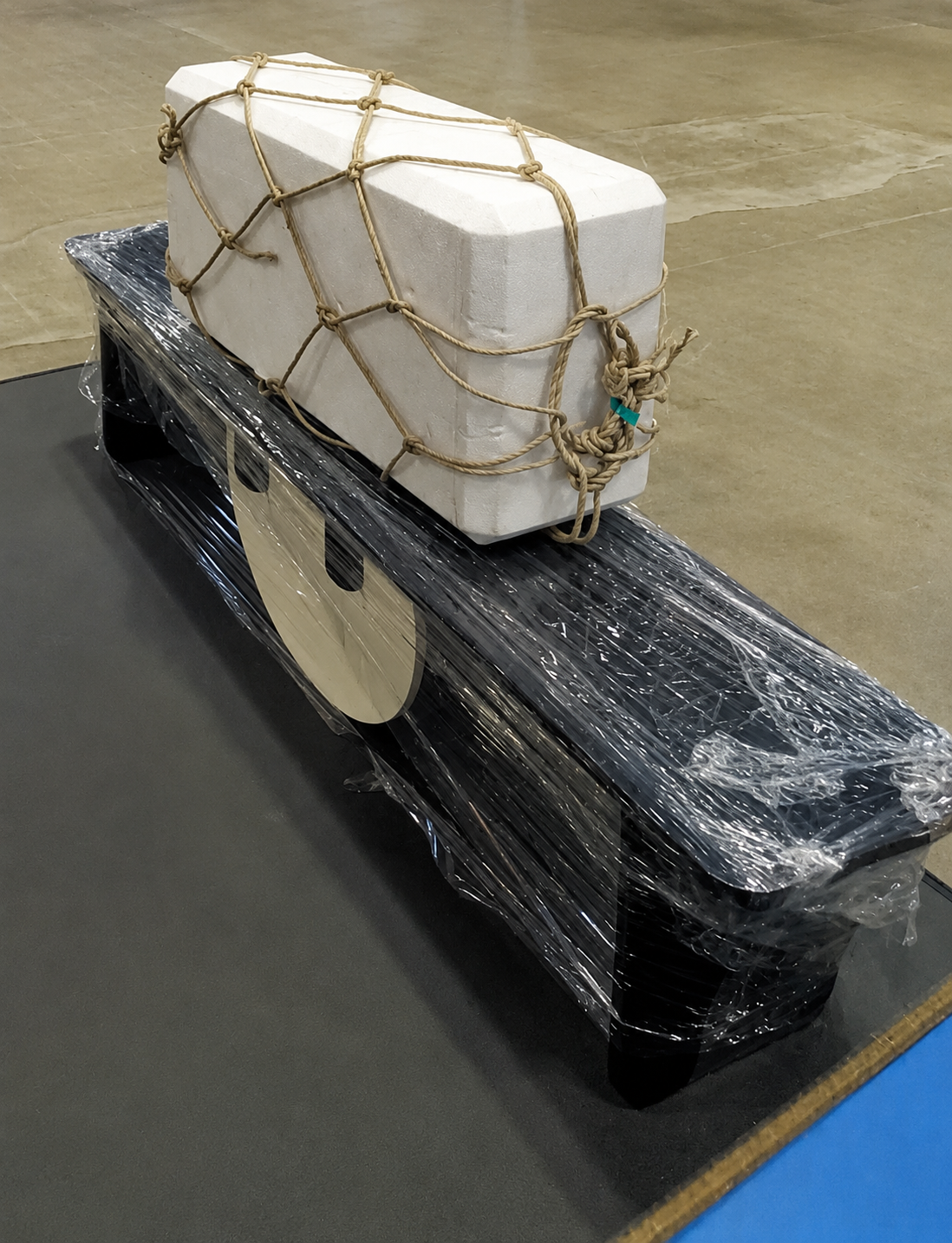
Benefits of Sustainable Engineered Materials
Sustainable engineered materials provide several advantages over conventional furniture materials, supporting both design flexibility and long-term performance:
- Supports more responsible material selection during furniture manufacturing
- Helps reduce reliance on virgin timber resources
- Highly resistant to moisture, rot and pest damage
- Can be machined, shaped and finished like traditional timber
- Designed for recyclability at end of life, subject to local recycling infrastructure
- Can be lighter than many traditional timber products depending on configuration
The material is designed to retain the workability and design flexibility expected of traditional furniture materials while supporting more sustainable manufacturing practices.
Integrating Sustainable Materials into Retail Design
Successful sustainable retail projects in Singapore typically follow a structured approach:
1. Material Specification During Concept Development
Sustainability objectives should be established during the concept design phase to guide subsequent material selection.
This enables the project team to specify materials that satisfy both design requirements and sustainability objectives without compromising the brand experience.
2. Coordination With Fabrication Capabilities
Not all materials can be processed by every workshop.
Working with a fit-out partner that has in-house fabrication capabilities ensures sustainable engineered materials can be precisely machined, finished and installed to specification.
3. Lifecycle Planning and Durability
Sustainable design extends beyond material selection to include durability, maintenance requirements, repairability, and end-of-life recyclability. Together, these factors determine the long-term environmental impact of a retail fit-out.
4. Transparent Documentation for ESG Reporting
Many retailers now require detailed material sourcing documentation to support corporate sustainability reporting.
This includes certification of recycled content, carbon footprint data and waste diversion metrics.
Sustainability Beyond Store Opening
A retail space is only sustainable if it can be efficiently maintained, refreshed, and eventually reinstated with minimal waste. Planning for future maintenance, repair, adaptable fixtures, and responsible end-of-life removal reduces lifecycle costs and environmental impact while extending the useful life of the fit-out.
As a licensed builder and registered contractor with in-house carpentry capabilities, Lum Chang Brandsbridge supports retailers throughout the complete lifecycle of sustainable retail environments, from design development and fabrication to installation, maintenance, refurbishment, and eventual store renewal.
Sustainable Design Across Different Retail Formats
Environmental considerations apply across all retail environments, though the specific solutions may vary.
| Retail Format | Sustainability Focus | Material Application |
|---|---|---|
| Luxury Retail | High-end finishes with verified sustainable sourcing | Sustainable engineered panels with premium surface finishes, FSC-certified timber accents |
| Boutique & Small-Format Retail | Maximising material efficiency in compact footprints | Modular systems, lightweight recycled materials, minimal waste fabrication |
| F&B and Hospitality | Moisture-resistant, hygienic, long-lasting surfaces | Sustainable engineered materials for counters and seating, combined with low-VOC finishes |
| Multi-location rollouts | Standardised sustainable specifications across sites | Prefabricated modular furniture systems, consistent recycled material sourcing |
Challenges in Sustainable Retail Fit-Outs
While demand for eco-friendly store solutions is growing, several practical challenges remain.
Material Availability and Procurement Lead Times
Emerging sustainable materials are not yet as widely available as traditional options.
This may extend procurement lead times, particularly for fast-track projects and multi-location rollouts.
Initial Investment Considerations
Some sustainable materials carry higher upfront costs than conventional alternatives.
However, when lifecycle costs, durability and waste reduction are factored in, the total investment often balances out or becomes favourable over time.
Cross-Disciplinary Coordination
Sustainable fit-outs require alignment between designers, fabricators, contractors and landlords.
Misalignment on material specifications or waste management protocols can undermine sustainability goals.
Aesthetic Perception
There is sometimes a misconception that eco-friendly materials compromise visual quality.
In reality, modern sustainable materials can be finished to achieve the same premium appearance as traditional timber, allowing brands to maintain their visual identity without compromising design quality.
The Role of Integrated Fit-Out Partners
Executing a truly sustainable retail fit-out requires more than good intentions.
It requires technical expertise, material knowledge, and disciplined project coordination throughout design, fabrication, and installation.
At Lum Chang Brandsbridge, we approach sustainable retail design Singapore projects with a focus on material innovation, precision fabrication and long-term performance.
Our in-house workshop allows us to work with emerging sustainable material solutions, helping maintain quality control while minimising material waste throughout fabrication.
We support retailers in balancing brand presentation, operational functionality and environmental responsibility across every stage of the fit-out, from concept development to final installation.
Final Thoughts
Sustainable retail design is rapidly becoming a strategic priority for retailers operating in Singapore.
From innovative material choices to smarter retail store layouts that reduce waste and energy consumption, every design and material decision contributes to a store's overall environmental footprint.
Retailers that integrate sustainability into their fit-out strategy are not only meeting regulatory and stakeholder expectations but also building more durable, cost-efficient and brand-aligned environments.
As material innovation continues to evolve, the gap between environmental responsibility and design excellence is closing rapidly.
Whether you're planning a flagship boutique, refreshing an existing outlet, or rolling out multiple stores across Singapore and Malaysia, Lum Chang Brandsbridge can advise on sustainable material selection, fabrication strategies, and fit-out solutions that balance brand experience, operational efficiency, and long-term environmental performance.